

Have you ever noticed that even with your air conditioner running full blast, sitting near your favorite living room window still feels like standing in a greenhouse? We all love the beautiful Florida Panhandle sunshine, but the intense heat and glare can quickly turn your coastal sanctuary into a sweltering, expensive burden. It is frustrating to watch your energy bills climb while your expensive flooring and furniture slowly fade under the relentless UV rays.
You shouldn't have to choose between a dark house and a cool one. This guide shows you how high-quality heat reduction window film for home use can block up to 85% of solar heat, allowing you to reclaim your comfort without losing those stunning Gulf views. By blocking 99.9% of harmful UV rays and reducing cooling costs by as much as 30%, these advanced films offer a permanent solution to the unique climate challenges we face here in Navarre and Destin. We will walk you through the latest 2026 solar control technologies, essential Florida building codes regarding light transmission, and how professional installation ensures your home stays protected for a lifetime.
Key Takeaways
- Understand how modern films filter out invisible infrared heat while keeping your beautiful coastal views crystal clear.
- Learn why heat reduction window film for home is a necessity in the Florida Panhandle to help lower cooling costs by up to 30%.
- Discover why professional installation outperforms DIY kits by ensuring glass compatibility and preventing common issues like bubbling in high humidity.
- Identify the best film type for your specific goals, whether you're focused on reducing TV glare, enhancing privacy, or stopping UV rays from fading your flooring.
- Find out how to prepare your space for a seamless installation and get an accurate quote from a local expert who understands our intense Gulf Coast sun.
Why Heat Reduction Window Film is a Florida Essential
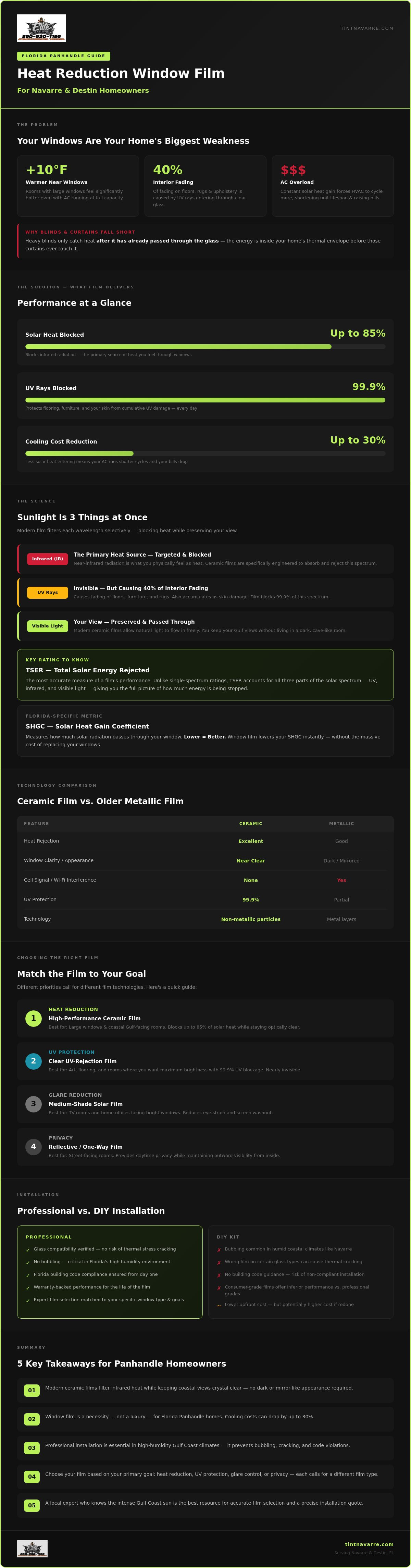
Living along the Emerald Coast means we deal with a sun that feels a little more personal than it does in other parts of the country. In Navarre and Destin, our windows aren't just for looking at the Gulf; they are the primary entry point for intense solar energy. Standard residential glass acts like a thermal bridge. It allows heat to move freely from the outside air into your living room through a process called thermal transfer. This is why a room with large windows often feels ten degrees warmer than the rest of the house, even when the AC is humming at full capacity.
Many neighbors try to solve this with heavy blinds or blackout curtains. While these help with privacy, they are physical barriers that only catch the heat after it has already passed through the glass. By that point, the energy is already inside your home's thermal envelope. Before exploring specific solutions, it is useful to learn What is Window Film? and how it functions as a microscopic, multi-layered shield for your existing glass.
The Hidden Cost of Solar Heat Gain
Modern coastal homes often feature large glass spans to capture water views, but this creates a massive greenhouse effect. When solar energy enters, it converts to heat and stays trapped by your walls and ceiling. Your HVAC system has to work overtime to keep up with this constant influx of energy. This doesn't just raise your monthly power bill; it significantly shortens the lifespan of your expensive AC unit by forcing it to cycle more frequently during our long summer months. For Florida homeowners, the Solar Heat Gain Coefficient (SHGC) is a rating that measures how much solar radiation passes through a window, with lower numbers indicating better heat rejection. Installing heat reduction window film for home allows you to lower that coefficient instantly without the massive cost of window replacement.
Protecting Your Interior from UV Damage
Clear windows are the biggest threat to your home's interior value. While visible light is great for your mood, the accompanying UV rays cause nearly 40% of the fading seen on hardwood floors, rugs, and expensive upholstery. Professional-grade heat reduction window film for home acts like a high-SPF sunscreen for your house. It blocks 99.9% of these rays, preserving the rich colors of your furniture and flooring for years to come. There are also genuine health benefits to think about. Reducing UV exposure while you are indoors helps protect your skin from cumulative damage, making your sun-drenched rooms a safer place for the whole family to relax.
The Science of Solar Control: How Heat Rejection Works
Sunlight is more than just what we see with our eyes. It is a complex combination of ultraviolet rays, visible light, and near-infrared radiation. While UV rays cause fading and visible light provides clarity, infrared radiation is the primary source of the heat you feel on your skin during a July afternoon in Navarre. Modern heat reduction window film for home uses advanced multi-layer construction to filter these wavelengths selectively. This allows the film to block the heat-heavy infrared spectrum while letting the beautiful natural light pass through into your living space.
We often talk to neighbors who worry that "heat rejection" means they have to live in a dark, cave-like house. That is a common myth. In the past, you needed a thick, dark, or mirror-like film to keep a room cool. Today, ceramic technologies allow us to block massive amounts of heat while keeping the glass virtually clear. These films use microscopic ceramic particles that are non-metallic and non-conductive. This means they won't interfere with your cell signals or Wi-Fi, unlike older metallic films. To better understand the benefits of residential window film, it helps to look at how these layers interact with the solar spectrum to create a more stable indoor climate.
Infrared Rejection: The Key to Staying Cool
Infrared rejection is the metric that matters most for Panhandle comfort. While some basic films simply shade the room, high-performance ceramic films target the infrared spectrum specifically. It is important to look at the Total Solar Energy Rejected (TSER) rather than just simple shading. Total Solar Energy Rejected is a comprehensive measurement that accounts for all three parts of the solar spectrum, providing a much more accurate picture of a film's performance than a single-spectrum rating. If you are curious about which technology fits your specific windows, you can ask our local team for a quick assessment.
Visible Light Transmission (VLT) Explained
Visible Light Transmission, or VLT, refers to the percentage of visible light that passes through the film. Choosing the right VLT is about balancing your aesthetic preferences with your performance goals. If you want to maintain your crystal-clear view of the Gulf, you might choose a film with a high VLT, perhaps around 70%. If privacy is your main concern for a street-facing bedroom, a lower VLT will provide that classic "tinted" look. In Florida, there are specific guidelines to keep in mind; the 2026 regulations for residential window tint require a VLT of over 25%. This ensures your home remains compliant while still providing excellent relief from the sun.
Professional Installation vs. DIY Home Window Tinting
It's easy to see the appeal of a weekend DIY project. When you browse online marketplaces, you'll find plenty of kits claiming to offer the same performance as a professional setup for a much lower entry price. We call this the 'Amazon Trap'. While these products might work in milder climates, they rarely survive a single summer in the Florida Panhandle. Our unique combination of intense heat, high humidity, and corrosive salt air puts an incredible amount of stress on window adhesives. Cheap DIY films often use low-grade glues that begin to bubble, peel, or delaminate within months. When this happens, you're left with a distorted view and a sticky mess that is incredibly difficult to remove without damaging the glass.
Beyond the look of the film, there is a significant safety factor to consider: glass-to-film compatibility. Every window has a specific tolerance for heat absorption. If you apply the wrong type of heat reduction window film for home to a modern double-pane window, you can cause thermal shock. This happens when the glass expands at an uneven rate, leading to stress fractures or even total glass breakage. A professional installer understands these technical requirements and ensures the film you choose is safe for your specific window type. Precision cutting and edge-to-edge coverage are the hallmarks of an expert who knows how to account for frame expansion and contraction.
Common DIY Failures in Coastal Environments
Coastal living presents challenges that generic DIY instructions don't cover. Salt air can creep under the edges of poorly cut film, leading to a phenomenon called 'fingering' where the edges curl and lift. Once this starts, there is no way to fix it. Many homeowners find that fixing a bad DIY job actually costs more than the original professional installation would have. You have to factor in the cost of specialized removal chemicals and the labor required to scrape away old adhesive without scratching the window surface. A failed DIY project often ends up being a double expense for the homeowner.
The Elite Window Tinting Professional Advantage
Since 2013, Jesse Manchester has built a reputation in Navarre and Destin by treating every home like it's his own. When you choose professional residential window tinting, you aren't just paying for the material. You are paying for a meticulous installation process that includes deep glass cleaning, precision cutting, and a clean application environment. Most importantly, our work comes with a lifetime warranty. This provides the ultimate peace of mind, knowing that if the film ever fails, we will be there to make it right. It is a long-term investment in your home's value and your daily comfort that DIY products simply can't match.
Choosing the Right Film for Your Home's Specific Needs
Every home in the Panhandle has a unique personality and its own set of challenges. A waterfront house in Navarre with floor-to-ceiling windows faces different hurdles than a cozy family home tucked away in the trees of Gulf Breeze. Before you decide on a specific product, it's helpful to identify your primary goal. Are you mostly concerned about the heat making your living room unusable, or is the glare on your television the main culprit? Perhaps you have expensive hardwood floors that are starting to show sun bleaching, or you simply want more privacy from neighbors. Identifying these priorities helps us match the right technology to each individual room in your house.
Local window types also play a role in this decision. Many homes built in our area over the last decade use double-pane, low-E glass. These windows are already designed to be somewhat efficient, but they can still struggle with the sheer volume of solar energy we receive. Selecting the wrong film can actually trap too much heat between the panes. We take the time to inspect your glass type first, ensuring that your choice enhances your home's curb appeal while remaining perfectly safe for the structure of the window itself.
Films for Glare Reduction and TV Rooms
There is nothing more annoying than trying to watch a big game or a movie while a massive streak of white light cuts across your screen. For media rooms and home offices, we often recommend dual-reflective films. These are specifically engineered to reduce the "mirror effect" you sometimes see on the inside of tinted windows at night. They provide excellent glare reduction during the day, so you don't have to live in total darkness just to see your monitor. You get to keep your natural light and your sanity while the film does the heavy lifting of filtering out those harsh reflections.
Spectrally Selective Films for 'Invisible' Protection
If you live in a neighborhood with a strict Homeowners Association (HOA), you might be worried about changing the look of your home's exterior. Many beachfront properties have rules against anything that looks like a traditional "dark" tint. This is where spectrally selective films shine. These high-tech options are virtually clear, yet they offer incredible heat rejection by targeting the infrared spectrum specifically. They provide the "invisible" protection you need to stay cool without altering your coastal views or violating any neighborhood guidelines. It's the premier choice for homeowners who want the benefits of solar control without the tinted aesthetic.
Finding the perfect balance for your specific floor plan is easier with an expert by your side. If you are ready to see how these different options look on your own glass, contact our team for a free quote and let us help you find the ideal solution for your Navarre or Destin home.
Getting Your Home Ready for a Cooler Summer
Transitioning your home into a more energy-efficient space is a straightforward process when you work with a local expert. Once you have decided that heat reduction window film for home is the right move for your property, the next step is getting an accurate assessment of the project. At Elite Window Tinting, we believe in keeping things simple and transparent for our neighbors in Navarre and Destin. You don't have to wait weeks for a representative to visit your home just to get a baseline price. We value your time and aim to make the entire experience as smooth as possible.
Preparing for the installation team is equally easy. We recommend clearing any decorative items from your windowsills and moving furniture about three feet back from the glass. This gives our technicians the space they need to ensure a clean, dust-free application. Our mobile service arrives fully equipped with everything needed to transform your windows, often completing the job in just a few hours depending on the size of your home.
The Quote and Measurement Process
We offer free quotes over the phone to save you time and hassle. To get the most accurate estimate, it helps to have a general count of the windows you want treated and their approximate dimensions. You don't need professional blueprints; a simple tape measure will do just fine. Because we prioritize efficiency and community support, we often have same-day installation available for residential projects. This allows you to start saving on cooling costs almost immediately after you make the call. Our team understands the unique window shapes and sizes common in coastal architecture, from arched transoms to large sliding glass doors.
Post-Installation Care and Longevity
Once the film is applied, there is a short curing period where the adhesive bonds permanently to the glass. During the first 30 days, you might notice small water bubbles or a slight haziness. This is a completely normal part of the drying process in our humid Florida environment. After the film has fully cured, maintaining it is simple. We recommend using a soft microfiber cloth and a mild, ammonia-free soap solution. Avoiding harsh chemicals and abrasive pads ensures the scratch-resistant coating stays crystal clear for the life of the film.
The real value in choosing a professional installation is the long-term security provided by our expertise. Every residential project we complete is backed by a lifetime warranty. This means you are protected against bubbling, peeling, or fading as long as you own your home. It is our way of saying thank you for trusting a local business that has been serving this community since 2013. If you are ready to lower your AC costs and protect your interior, Get your free residential window tinting quote from Elite today!
Reclaim Your Comfort and Coastal Views
Protecting your home from the Florida sun is more than a luxury; it is a smart long-term investment in your property and your daily quality of life. We have explored how modern ceramic technology targets heat at the source while preserving the natural light that makes Panhandle living so special. By choosing professional heat reduction window film for home, you avoid the common pitfalls of DIY failures and ensure your glass remains safe and efficient for years to come. It is about more than just a tint; it is about creating a sanctuary where you can enjoy the Gulf views without the greenhouse effect.
Elite Window Tinting has been a trusted local authority for our neighbors in Navarre and Destin since 2013. We take immense pride in our work, which is why we offer a lifetime warranty on all residential installations. Our same-day mobile service is designed to be efficient and respectful of your time, providing immediate relief from rising energy costs and interior fading. If you are ready to transform your living space into a cooler and more protected environment, Get a Free Quote for Your Home Today. We look forward to showing you why so many of your neighbors trust us with their homes.
Frequently Asked Questions
Does heat reduction window film really work for Florida homes?
Yes, modern window films can block up to 85% of solar heat from entering your home. This technology is specifically designed to handle the intense UV levels we experience in the Florida Panhandle. By stopping heat at the glass, you prevent the greenhouse effect that typically makes sun-drenched rooms feel unbearable. It is an incredibly effective way to manage indoor temperatures without constantly adjusting your thermostat.
Will window tinting make the inside of my house too dark?
No, you don't have to live in a dark home to stay cool. Advanced spectrally selective films are virtually clear and allow high levels of natural light to pass through while still rejecting the majority of infrared heat. You can choose from various shades that maintain your beautiful coastal views without noticeably darkening your living space. We help you find the perfect balance between light transmission and heat rejection.
Can I install heat reduction film on double-pane windows?
Yes, you can safely install heat reduction window film for home on double-pane glass if the film is correctly matched to your specific window type. Professional installers use compatibility charts to ensure the film doesn't cause excessive heat absorption, which could lead to thermal shock or seal failure. This technical assessment is one of the most important reasons to choose an expert over a DIY kit.
How much can I actually save on my energy bills with window film?
High-performance films can reduce your monthly cooling costs by as much as 30%. With Florida electricity bills averaging around $262 in 2026, these savings can make a significant impact on your household budget. Beyond the monthly power bill, you also reduce the wear and tear on your HVAC system, which helps avoid expensive premature repairs or unit replacements during the peak of summer.
How long does professional residential window tinting last?
Professional-grade window film is engineered to last for the lifetime of your windows. Unlike cheap retail products that often bubble or peel within a few years, our materials are designed to withstand the unique challenges of coastal humidity and salt air. When installed by a seasoned expert, it becomes a permanent part of your home's energy efficiency strategy that you won't need to worry about replacing.
Is there a warranty on the window film installation?
Yes, every residential project we complete is backed by a comprehensive lifetime warranty. This coverage ensures that your investment is protected against common issues like bubbling, peeling, or fading for as long as you own the home. We have been serving the Navarre and Destin community since 2013, so you can feel confident that we will be here to honor that commitment if you ever need support.
Does the film go on the inside or the outside of the glass?
Standard residential films are applied to the interior surface of your windows. This protects the film from the corrosive effects of salt air, wind-blown sand, and the frequent tropical storms we face in the Panhandle. By installing on the inside, we ensure the scratch-resistant coating remains pristine and the adhesive bond stays strong, allowing the heat reduction window film for home to perform at its peak for decades.
Can window film help with the glare on my computer and TV screens?
Yes, window film is an excellent solution for stopping the harsh reflections that ruin your screen time. Dual-reflective films are particularly popular for home offices and media rooms because they reduce the "mirror effect" on the glass. This allows you to enjoy your natural light and Gulf views without having to sit in a dark room just to see your monitor or television clearly.
